Table of Contents
Acquiring a new customer costs five to seven times more than retaining an existing one. Yet most businesses invest the majority of their marketing budget in acquisition and treat retention as an afterthought. A well-designed customer loyalty program flips that equation — turning one-time buyers into repeat customers, and repeat customers into advocates who bring others with them.
Understanding how customer loyalty program work, and what separates effective ones from forgettable ones, is foundational knowledge for any business owner serious about sustainable growth.
Table of Contents
What Is a Customer Loyalty Program?
A customer loyalty program is a structured, long-term marketing strategy designed to reward customers for repeated engagement with a business. In its simplest form, it gives customers an incentive to keep coming back — through points, discounts, exclusive access, or other benefits — rather than switching to a competitor.
Customer loyalty itself is defined as the likelihood that a customer will continue to do business with a brand. It is not just a measure of past purchases; it reflects the overall quality of the experience a customer has had, the trust they have built in a brand, and the perceived value they receive relative to alternatives.
A loyalty program is the mechanism through which a business actively nurtures and rewards that relationship, rather than leaving it to chance.
Why Every Business Needs a Customer Loyalty Program
The short answer: because retaining the customers you already have is almost always more profitable than acquiring new ones. But the benefits go well beyond simple retention.
1. Lower Customer Acquisition Cost Over Time
Every new customer you acquire comes at a cost — paid advertising, promotional offers, sales effort, and onboarding. Loyal customers bypass most of that cost. Once they trust your brand, they return on their own, respond to far less aggressive marketing, and require fewer incentives to convert. A strong customer loyalty program compounds this effect: the longer a customer stays, the more value they generate relative to the cost of keeping them.
2. Higher Average Order Value
Loyal customers consistently spend more per transaction than new customers. They have direct experience with your products and services, which removes hesitation. They trust your quality and feel appreciated by your brand, which makes them more willing to explore higher-value items, bundle purchases, and act on upsells.
Research across multiple industries shows that existing customers are significantly more likely to try new products and spend more per order than first-time buyers. A customer loyalty program accelerates this behavior by rewarding higher spend with greater benefits.
3. More Accurate Revenue Forecasting
A reliable base of loyal customers makes revenue planning measurably more predictable. When you know how many customers regularly purchase from you — and roughly how often and how much — your finance and marketing teams can plan with greater confidence. This reduces over-reliance on unpredictable new customer acquisition and allows for more efficient budget allocation across the business.
4. Stronger Brand Differentiation
In markets where products and prices are similar across competitors, the customer experience and loyalty program can become a meaningful differentiator. Customers who feel they are getting extra value from your program — points, exclusive access, personalized offers — have a concrete financial reason to choose you over a competitor offering the same product at the same price.
5. Organic Word-of-Mouth and Referrals
Loyal customers are the most credible promoters a business can have. When someone has a consistently positive experience with a brand and feels genuinely valued by it, they talk about it — to friends, family, colleagues, and on social media. This word-of-mouth is far more trusted than paid advertising and costs the business nothing beyond the quality of the experience it has already delivered.
A customer loyalty program enhances this effect by giving loyal customers additional reasons to feel valued and talk about the brand, particularly when the program includes referral bonuses or social sharing incentives.
When Might a Loyalty Program Be Less Critical?
Most businesses benefit from a customer loyalty program at every stage of growth. There are, however, a small number of situations where the urgency is lower:
Monopoly or near-monopoly market position. If your business provides a product or service with no meaningful competitor and customers have no practical alternative, loyalty mechanics are less necessary for retention — though they still support brand perception and word-of-mouth.
Essential utility products. Businesses providing necessities (water, electricity, essential infrastructure) that customers must use regardless of brand experience have less to gain from a traditional loyalty structure, though service quality still matters for satisfaction.
Even in these cases, a customer loyalty program remains valuable for brand reputation and referral generation. The exceptions are narrow.
How to Build an Effective Customer Loyalty Program
Understanding the value of a customer loyalty program is the starting point. Building one that actually works requires deliberate design across several dimensions.
Prioritize Product and Service Quality First
No customer loyalty program can compensate for a poor product or an indifferent service experience. The foundation of any loyalty initiative is the core offering: customers come to you, and stay with you, because of the value you provide. If that value is inconsistent or disappointing, a points system will not change their behavior.
Before investing in loyalty mechanics, audit the quality of your product, your customer service, and your post-purchase experience. Loyalty programs amplify a positive experience — they do not fix a negative one.
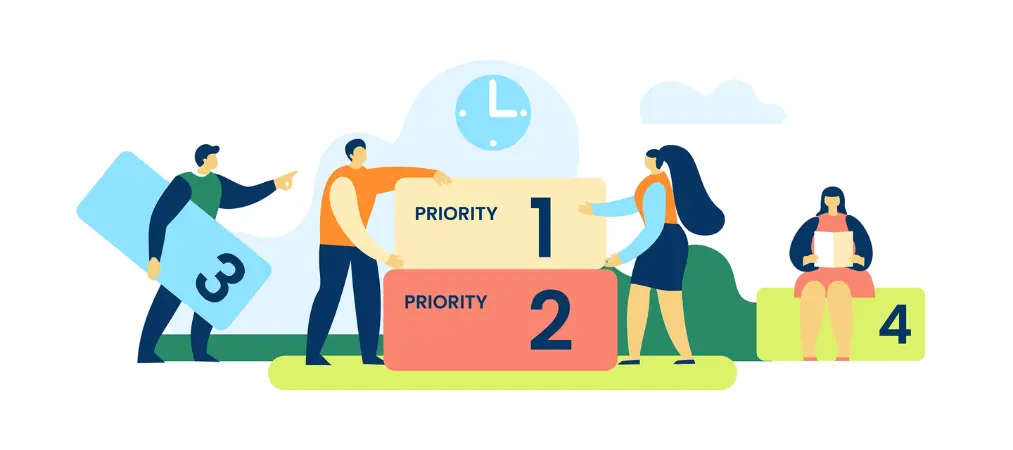
Implement a Points-Based Rewards System
The most widely adopted and well-understood format for a customer loyalty program is a points system. Customers earn points for purchases and defined actions — writing a review, sharing a product on social media, referring a friend — and redeem those points for rewards such as discount codes, free products, or store credit.
Points systems work because they create a clear, ongoing incentive structure that makes every interaction with your brand feel rewarding. Customers who are close to a redemption threshold are more motivated to make an additional purchase to reach it, directly increasing purchase frequency and average order value. Importantly, customers who have accumulated points are also less likely to defect to a competitor — they have a tangible financial reason to stay.
Best practices for a points system:
- Make earning points simple and transparent. Customers should be able to understand at a glance how many points they have and what they can do with them.
- Set meaningful but achievable redemption thresholds. If points feel unattainable, they lose motivational power.
- Display point balances prominently on account pages and in transactional emails.
- Send regular reminders when customers are close to a reward — these are among the highest-converting trigger emails in eCommerce.
Introduce VIP Tiers
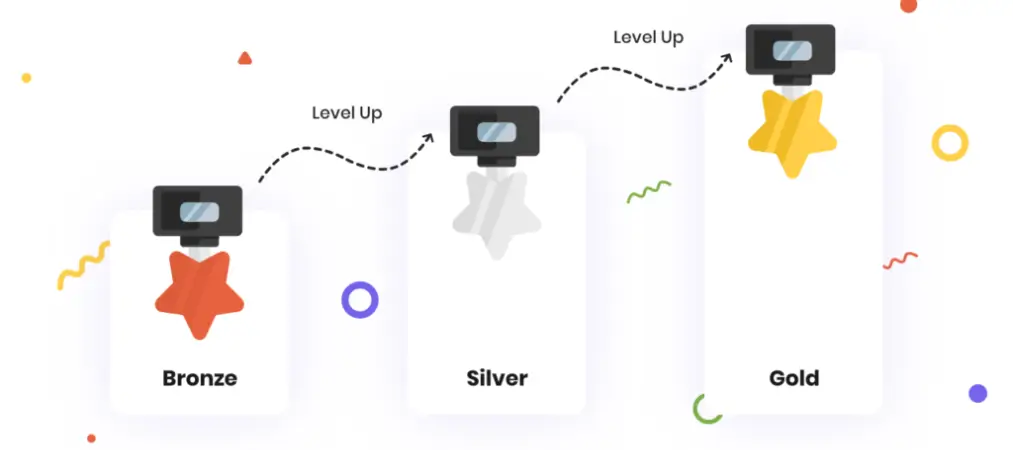
A tiered customer loyalty program adds a status dimension that motivates customers to increase their engagement over time. By creating two or three levels — for example, Silver, Gold, and Platinum — and offering progressively better benefits at each tier, you tap into customers’ desire for recognition and social status.
A customer at the base tier might receive 5% off their next purchase. A Gold member earns 10%, early access to new products, and free shipping. A Platinum member receives 15% off, a dedicated support contact, and exclusive member-only offers.
The tier structure encourages customers to actively work toward a higher status. The gap between tiers creates urgency: a customer who is one purchase away from VIP status has a strong, immediate reason to buy again. Once they reach VIP, they have an equally strong reason not to risk losing it.
When designing tiers, make the criteria and benefits clear, and ensure the benefits at each level are genuinely valuable — not superficially different.
Focus Heavily on After-Sale Service
A customer loyalty program does not end at the point of purchase. In many ways, the post-purchase experience is where loyalty is actually built or lost. Customers who have just spent money with you are in a heightened state of attention: they are waiting for delivery, evaluating whether their purchase was worth it, and forming an impression of whether the brand values them as a customer.
Invest in the post-purchase touchpoints: delivery confirmation emails that feel personal, packaging that creates a positive unboxing moment, proactive communication if there are any delays, and a returns or exchange process that is frictionless rather than punitive. These experiences are what customers remember — and what they describe to others.
Personalize the Loyalty Experience
Generic loyalty programs are less effective than personalized ones. Customers respond more strongly to rewards and offers that feel relevant to their specific behavior and preferences than to blanket promotions sent to everyone.
Use the purchase data your loyalty program generates to personalize communications. Send a birthday offer. Recommend products based on past purchases. Offer bonus points on categories a customer buys frequently. Acknowledge milestones — a one-year anniversary as a member, or a customer’s tenth purchase — with a personalized reward.
Even small personalization signals significantly increase the emotional connection customers feel with a brand. They signal that the business sees them as an individual, not just a transaction.
Include a Referral Component
Word-of-mouth is the most efficient channel in most customer loyalty programs, and adding a formal referral component converts organic advocacy into structured growth. Offer existing customers a tangible reward — bonus points, a discount, store credit — for each new customer they refer who makes a purchase.
Referral programs work particularly well within loyalty structures because the referring customer is already motivated by their relationship with the brand. They are recommending something they genuinely use and value, and the incentive makes them more likely to do so actively rather than passively.
Invest in Employee Experience
This is an underappreciated driver of customer loyalty. Businesses where employees are treated well, engaged with their work, and feel valued by their employer consistently deliver better customer experiences. Customers interact with your team — in person, by chat, by email — and the quality of those interactions shapes their impression of your brand.
A team that feels positive about where they work is more attentive, more helpful, and more naturally invested in the outcome for each customer. That human quality cannot be manufactured by a loyalty program alone, but it reinforces and amplifies every other element of a loyalty strategy.

Types of Customer Loyalty Programs
Different formats suit different business models. Here is a brief overview of the most effective structures:
Points program. Customers earn points per dollar spent and redeem them for rewards. The most universal format; suitable for most eCommerce, retail, and service businesses.
Tiered program. Customers progress through status levels based on cumulative spend or engagement. Highly effective for motivating increased purchase frequency and creating aspirational status.
Paid membership program. Customers pay a recurring fee (monthly or annual) in exchange for premium benefits — free shipping, exclusive discounts, early access. Amazon Prime is the most prominent example. Works best when the benefits clearly exceed the fee and are used regularly.
Cashback program. Customers receive a percentage of their spend back as store credit. Simple to understand and highly motivating for price-sensitive customers.
Referral program. Customers earn rewards for bringing new customers to the business. Most effective when combined with one of the above rather than used in isolation.
Hybrid program. A combination of points, tiers, and referral mechanics, often with personalized rewards layered on top. The most sophisticated and most effective format for businesses with the resources to build and maintain it.
Key Metrics to Measure Your Customer Loyalty Program
A customer loyalty program should be measured against business outcomes, not just program activity. The most important metrics to track:
Customer retention rate. The percentage of customers who make a repeat purchase within a defined period. This is the primary measure of whether your loyalty program is working.
Repeat purchase rate. How frequently enrolled loyalty members purchase compared to non-members. A meaningful gap between the two validates the program’s impact.
Average order value (AOV). Loyalty members should, over time, spend more per transaction than non-members. Track this comparison quarterly.
Customer lifetime value (CLV). The total revenue a customer generates over the full duration of their relationship with your business. A successful loyalty program should increase CLV meaningfully over time.
Redemption rate. The percentage of earned points or rewards that are actually redeemed. A very low redemption rate suggests the rewards are not compelling enough; a very high rate may indicate they are too generous.
Net Promoter Score (NPS). How likely loyalty program members are to recommend your business to others. This captures the word-of-mouth value your program generates.
Conclusion
A customer loyalty program is not a marketing tactic for large enterprises. It is a foundational business strategy for any company that wants to grow sustainably — by maximizing the value of the customers it already has, rather than continuously spending to replace those it loses.
The businesses that build the strongest loyalty programs share a common approach: they start with genuine product and service quality, design rewards that are meaningful rather than cosmetic, personalize the experience as much as their data allows, and measure the outcomes rigorously.
A loyalty program done well does not just keep customers coming back — it turns them into advocates who bring others with them, creating a compounding growth effect that no paid advertising channel can replicate.
Acquiring a new customer costs five to seven times more than retaining an existing one. Yet most businesses invest the majority of their marketing budget in acquisition and treat retention as an afterthought. A well-designed customer loyalty program flips that equation — turning one-time buyers into repeat customers, and repeat customers into advocates who bring others with them.
Understanding how loyalty programs work, and what separates effective ones from forgettable ones, is foundational knowledge for any business owner serious about sustainable growth.
If you want to know more about how to set up a Shopify store, you can check our other articles on our website here: orderprinter.vify.io