Table of Contents
Reading is one of the most reliable habits shared by successful entrepreneurs and business owners. Unlike courses, podcasts, or conferences, a great book gives you deep, concentrated insight — often from someone who built, led, or studied businesses for decades before writing a single word.
The nine books below are not just popular recommendations. This list covers 9 best books for entrepreneurs and business owners: titles that cover communication, leadership, persuasion, resilience, productivity, and the unfiltered reality of building a company from the ground up.
Table of Contents
Why Reading Matters for Entrepreneurs and Business Owners
Running a business is an exercise in continuous problem-solving. You will face challenges in communication, leadership, team building, customer relationships, and strategic decision-making — often in the same week. Books written by experienced founders, researchers, and leaders give you frameworks to navigate those challenges without having to learn everything the hard way.
The return on investment from even a single book is significant. One concept, applied consistently, can change how you manage your team, pitch to clients, or think about growth. The books on this list have each done exactly that for countless entrepreneurs and business owners around the world.
9 Must-Read Books for Entrepreneurs and Business Owners
1) The Elements of Style by E.B. White and William Strunk Jr.

Why entrepreneurs and business owners should read it: Every business runs on communication — emails, proposals, product descriptions, marketing copy, investor updates. Writing clearly and concisely is one of the most underrated business skills, and no book teaches it better than this one.
First published in 1918 and updated by the co-author of Charlotte’s Web, this short guide remains as relevant today as it was a century ago. Its core advice — cut every word that does not earn its place — applies directly to everything a business owner writes. The principle of replacing a phrase like “due to the fact that” with simply “because” is the kind of discipline that makes your business communications sharper, faster to read, and more persuasive.
Best for: Entrepreneurs who write their own marketing copy, proposals, email campaigns, or business plans.
Key takeaway: Clear, concise writing is a competitive advantage in business. Remove the clutter and your message lands harder.
2) The E-Myth by Michael E. Gerber
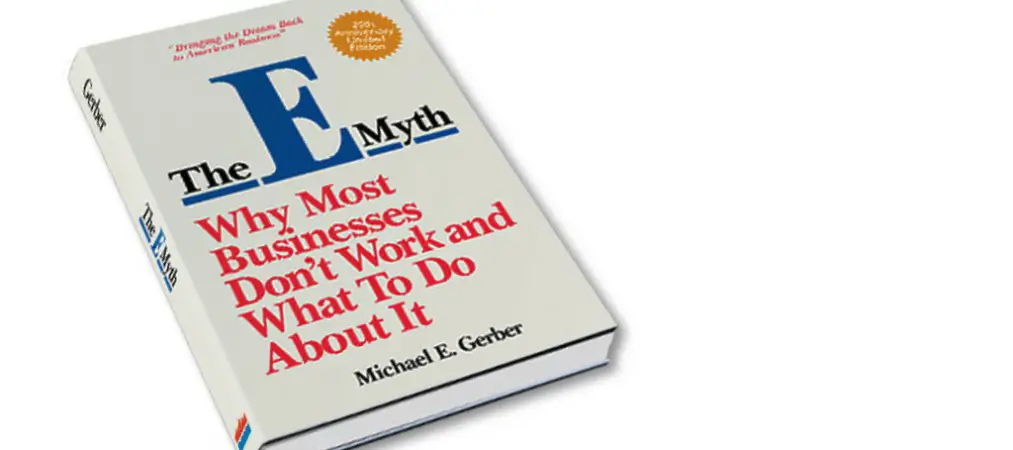
Why entrepreneurs and business owners should read it: This is arguably the most important book for anyone starting or running a small business. Gerber’s core argument is that most small businesses fail not because the owner lacks skill in their trade, but because they lack the systems and processes that allow a business to run without them.
Using the McDonald’s franchise as a central metaphor, Gerber explains that a scalable business is built on documented procedures and consistent systems — not on the founder’s personal talent. A business that depends entirely on its owner is not a business; it is a job. Gerber wrote this in 1986 and updated it in 1995, but the insight is timeless and more relevant than ever for eCommerce and service business owners.
Best for: Small business owners and early-stage entrepreneurs who are doing everything themselves and wondering why the business is not growing.
Key takeaway: Build systems, not dependency. Your business should be able to run without you in every role.
3) Grit by Angela Duckworth
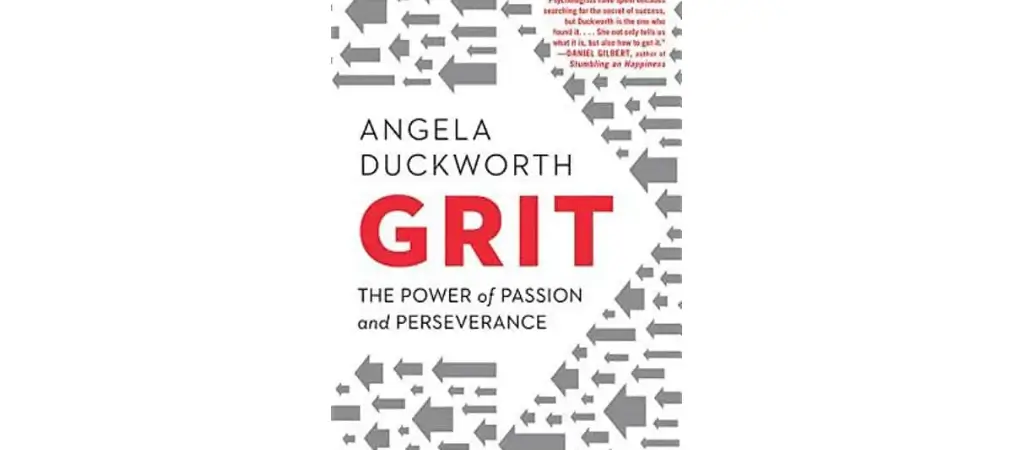
Why entrepreneurs and business owners should read it: Building a business is hard, and there will be extended periods where progress feels invisible. Duckworth, a University of Pennsylvania professor of psychology, spent years studying what separates people who achieve long-term goals from those who quit.
Her conclusion: the most reliable predictor of success is not talent or intelligence — it is grit, defined as the combination of passion and sustained perseverance. Drawing on research across West Point cadets, spelling bee champions, and sales professionals, Duckworth builds a compelling case that the entrepreneurs and business owners who succeed are those who keep going when others stop.
Best for: Entrepreneurs in difficult growth phases, founders facing repeated setbacks, or anyone questioning whether to persist with a business.
Key takeaway: Passion without persistence goes nowhere. Long-term success belongs to those who stay in the game.
4)How To Win Friends and Influence People by Dale Carnegie
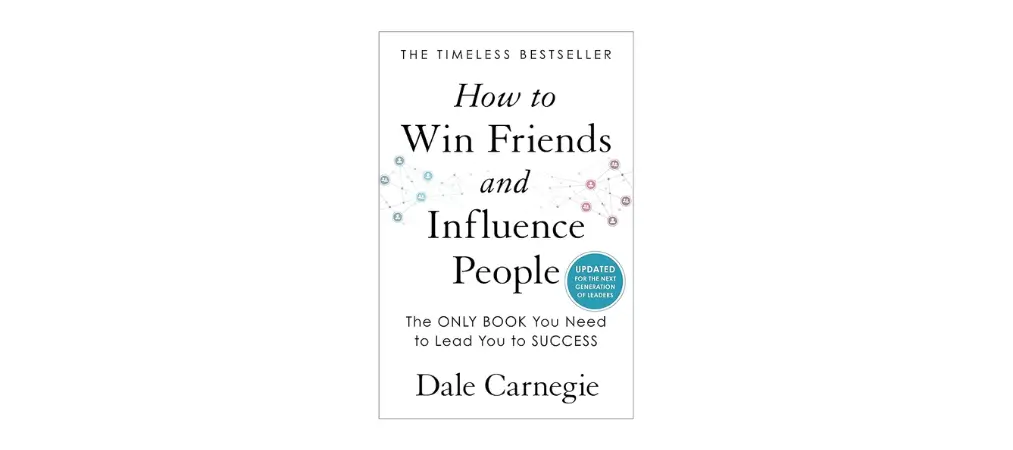
Why entrepreneurs and business owners should read it: First published in 1936 and since translated into dozens of languages, this is one of the best-selling books of the twentieth century — and it is still genuinely useful. Carnegie’s insights into building relationships, making people feel valued, and influencing others through genuine interest rather than manipulation are foundational skills for every entrepreneur and business owner.
Whether you are negotiating with suppliers, managing a team, pitching to investors, or handling a difficult customer, the principles in this book apply. The writing is dated in style, but the psychology is sound and the practical advice is actionable from the first chapter.
Best for: Entrepreneurs in sales, client-facing roles, team leadership, or anyone who wants to become a more effective communicator and relationship builder.
Key takeaway: People do business with those they like and trust. Genuine interest in others is the most reliable way to build both.
5)Influence: The Psychology of Persuasion by Robert B. Cialdini
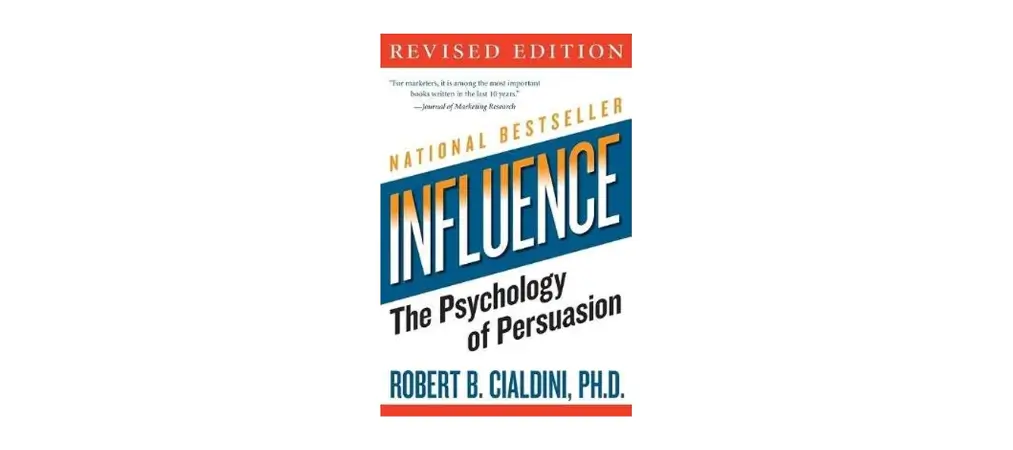
Why entrepreneurs and business owners should read it: Cialdini spent years studying the science of why people say yes. The result is a framework of six universal principles of persuasion — reciprocity, commitment and consistency, social proof, authority, liking, and scarcity — that drive human decision-making in business and everyday life.
For entrepreneurs and business owners, this book is essential reading on multiple levels. It helps you understand how to market your products more effectively, how to frame negotiations, how to build customer trust, and how to recognize when these principles are being used against you. Cialdini updated the book in 2021 with a seventh principle — unity — making the latest edition the most comprehensive version yet.
Best for: Entrepreneurs working in marketing, sales, eCommerce conversion optimization, or anyone who negotiates regularly.
Key takeaway: Persuasion follows predictable patterns. Understanding those patterns makes you a more effective marketer, seller, and negotiator.
6)Leaders by General Stanley McChrystal, Jeff Eggers, and Jason Mangone

Why entrepreneurs and business owners should read it: Leadership is one of the skills that most directly determines whether a business thrives or stagnates, and it is one of the hardest to develop without guidance. McChrystal — a retired four-star general who commanded U.S. forces in Afghanistan — examines thirteen of history’s most influential leaders, from Robert E. Lee to Walt Disney, and asks a deceptively simple question: what actually makes a leader effective?
The answers challenge many common assumptions about leadership and provide a nuanced, practical framework that applies to small teams and large organizations alike. This is not a motivational book — it is a rigorous examination of leadership under pressure, written by someone who has led in some of the most demanding environments imaginable.
Best for: Business owners who manage teams, entrepreneurs transitioning from solo operator to team leader, or anyone who wants to lead more deliberately.
Key takeaway: Great leadership is not about a single heroic quality. It is a set of learnable, context-dependent behaviors.
7)Lost and Founder: A Painfully Honest Field Guide to the Startup World by Rand Fishkin
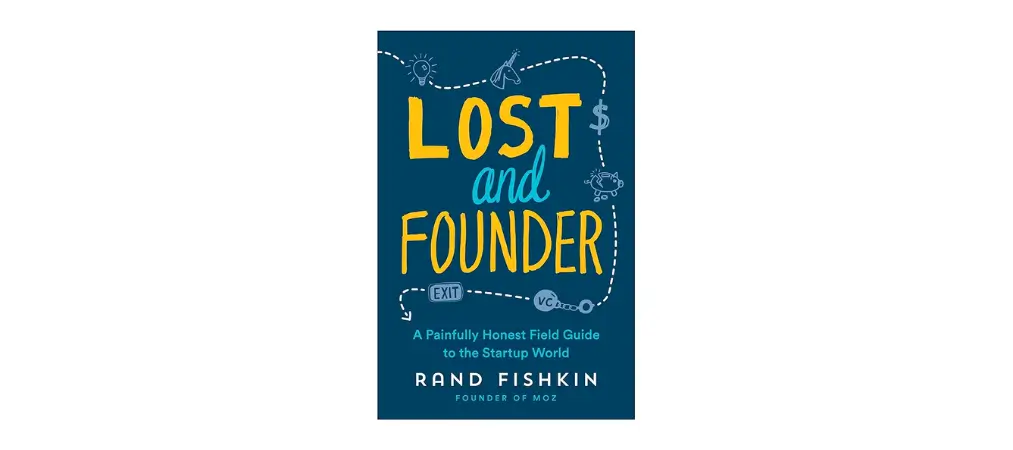
Why entrepreneurs and business owners should read it: Rand Fishkin is the founder of Moz, one of the most recognized SEO software companies in the world. Unlike most founder memoirs, this book does not present a sanitized success story. Fishkin is candid about the mistakes he made, the pressure of venture capital, the strain growth at any cost placed on his company and his mental health, and the lessons he would do differently.
For entrepreneurs and business owners, the most valuable insight in the book is Fishkin’s advice to grow from your existing customer base before chasing new acquisition. This customer-first growth philosophy is consistently overlooked in a startup culture obsessed with scaling fast, and it is advice that tends to save businesses far more than it costs.
Best for: Early-stage founders considering venture capital, entrepreneurs building SaaS or subscription businesses, or any business owner who wants an honest account of what scaling a startup actually looks like.
Key takeaway: The startup playbook glorified in media is often wrong for most businesses. Slow, customer-led growth frequently outperforms fast, capital-fueled growth.
8)Outliers by Malcolm Gladwell
Why entrepreneurs and business owners should read it: Gladwell’s 2008 book popularized the 10,000-hour rule — the idea, drawn from research by Anders Ericsson, that mastery in any field requires roughly 10,000 hours of deliberate practice. But the broader argument of Outliers is more nuanced and more useful: that exceptional success is the product of a combination of talent, timing, opportunity, and sustained effort.
For entrepreneurs and business owners, this reframing is valuable. It shifts focus away from waiting for a breakthrough moment and toward the unglamorous, consistent work that actually builds expertise and long-term competitive advantage. The book is readable, entertaining, and full of counterintuitive case studies — from the Beatles’ residency in Hamburg to the cultural factors behind airline crash rates.
Best for: Entrepreneurs who want a deeper understanding of what separates top performers, or anyone who has ever wondered whether success is more about talent or effort.
Key takeaway: Talent matters, but deliberate, accumulated effort is what produces the results that look like overnight success from the outside.
9)The 7 Habits of Highly Effective People by Stephen R. Covey
Why entrepreneurs and business owners should read it: Published in 1989, Covey’s book remains the definitive personal productivity and leadership framework for business owners. Hundreds of productivity books have been written since, but most are variations or subsets of Covey’s original model. The seven habits — Be Proactive, Begin with the End in Mind, Put First Things First, Think Win-Win, Seek First to Understand Then to Be Understood, Synergize, and Sharpen the Saw — form a complete framework for managing yourself and leading others effectively.
For entrepreneurs, the habits that tend to deliver the most immediate impact are “Begin with the End in Mind” (strategic clarity) and “Put First Things First” (time management based on importance rather than urgency). Returning to this book every few years as your business evolves is consistently worthwhile.
Best for: Business owners looking to improve personal productivity, time management, and team leadership, especially those moving from solo operation to managing others.
Key takeaway: Effectiveness is a set of principles, not a set of tricks. Covey’s framework holds up because it is built on fundamentals that do not change.
How to Get the Most from These Books
Reading a business book is useful. Applying it is transformative. A few principles that experienced entrepreneurs use to make books more actionable:
Read with a specific problem in mind. Choose each book based on what your business needs right now. If you are struggling with team dynamics, start with Covey or McChrystal. If you are working on marketing copy, start with The Elements of Style or Cialdini.
Take notes on application, not just ideas. For each chapter or key insight, write down one specific thing you will do differently. Concepts without action produce no results.
Return to your best books regularly. Several books on this list — particularly Covey, Cialdini, and Gerber — reward re-reading at different stages of your business. What resonates at year one is not what resonates at year five.
Share and discuss. If you have a team, reading the same book and discussing the implications together compounds the value. It aligns thinking, improves language around shared concepts, and makes implementation more likely.
Final Thoughts
These nine best books for entrepreneurs and business owners cover the full range of challenges you will face: how to communicate, how to build systems, how to lead, how to sell, how to stay resilient, and how to grow sustainably. No single book has all the answers, but together they form a library that can meaningfully change how you build and run your business.
Start with the one that addresses your most pressing challenge today. The rest will become relevant in time.